Viking refrigerator running warm through a Phoenix summer
Why a built-in that coped all winter starts losing the fresh-food side in June, which of the four usual causes it turns out to be, and what is worth checking before the call.
Written by Sam Achterberg
Trade Service technician — electrical and intermittent faults · 15 years in the trade
Works on Viking appliances · supply voltage testing · intermittent electrical faults
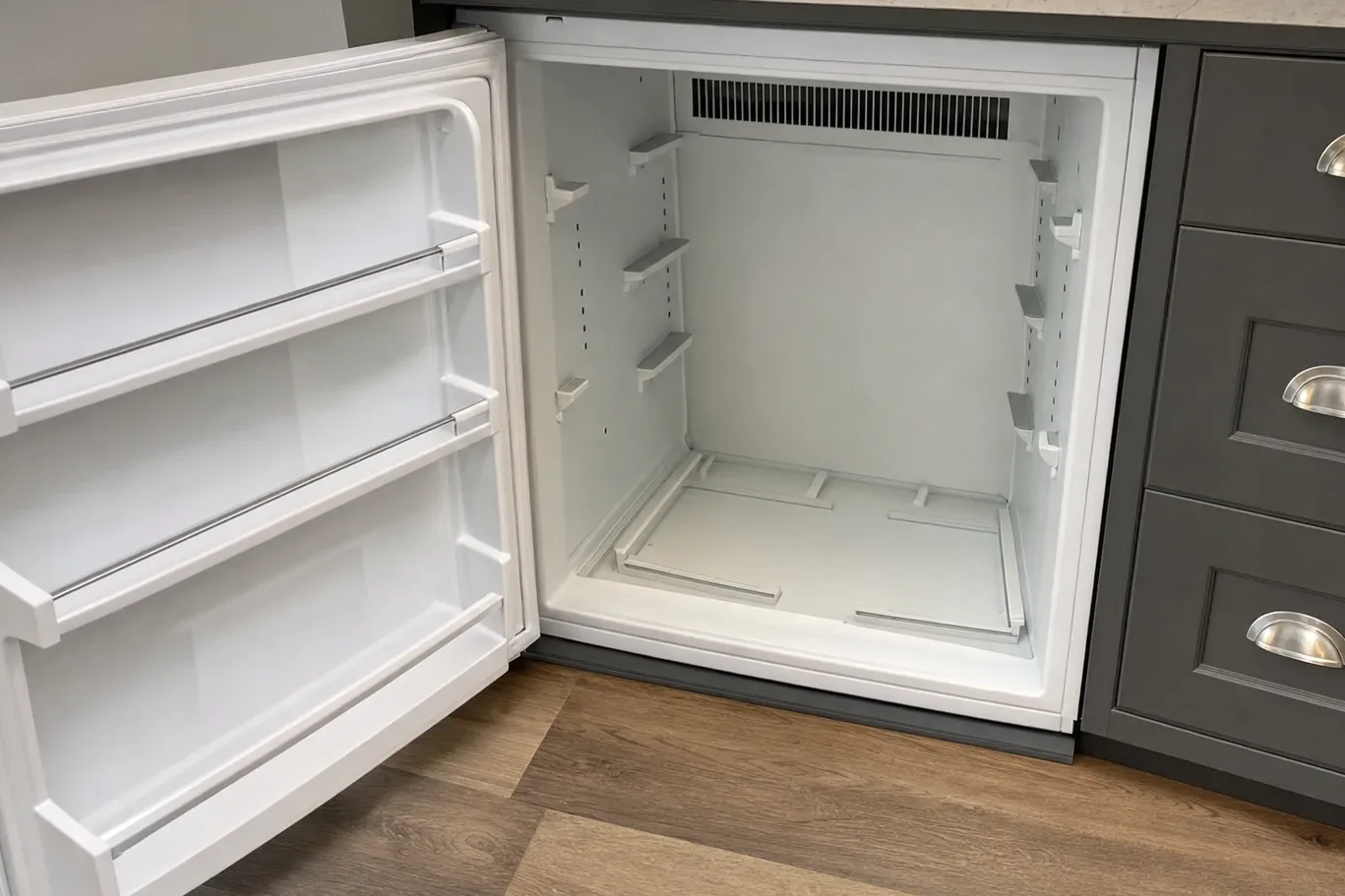
A Viking built-in that held 37°F all winter starts drifting in June. Milk on the top shelf goes off two days early. By late July the salad drawer is sitting at 48°F and the freezer, oddly, is still perfect. Nothing was touched, nothing was moved, and nobody changed a setting — the only variable is the outside air, and here that variable moves fifty degrees.
That story is the most common refrigeration call in this city between May and September, and it is worth understanding because it almost never means what people assume it means.
What “running warm” actually means on a built-in
Nothing inside a refrigerator generates cold. What the machine actually does is shift heat — out of the cabinet, into the air of your kitchen — and the cabinet only stays cold while the air side of the system sheds that heat faster than the cabinet picks it back up. Every fault below is a failure in one of those two directions: heat rejection out the front, or air distribution inside.
So the first question on the phone is never “what temperature is it?” but “which compartment, and does the compressor stop?” Those two answers split the problem four ways before anyone opens a panel:
- Fresh food warm, freezer fine, compressor almost never stops — heat rejection.
- Fresh food warm, freezer fine, compressor cycling normally — air distribution or defrost.
- Both compartments warm, compressor running — sealed system, or a condenser fan that has stopped entirely.
- Both compartments warm, compressor silent — electrical: start components, overload, board.
Ninety per cent of Phoenix summer calls sit in the first two.
The condenser coil, and why Phoenix is different
The condenser is the coil that dumps heat, and on most Viking built-ins it lives behind the lower grille or up in the top compartment with a fan pulling room air across it. It works by temperature difference: coil hotter than the room, heat flows. When the room is 78°F it has plenty of difference to work with. When the kitchen sits at 84°F because it is 112°F outside and the air conditioning is losing ground, the margin shrinks — and anything insulating that coil now matters enormously.
What insulates it is dust, lint and pet hair, felted into a mat between the fins. In a mild climate a coil in that state still works, badly, all year. Here, it works until roughly the third week of the first real heat wave and then stops being able to keep up.
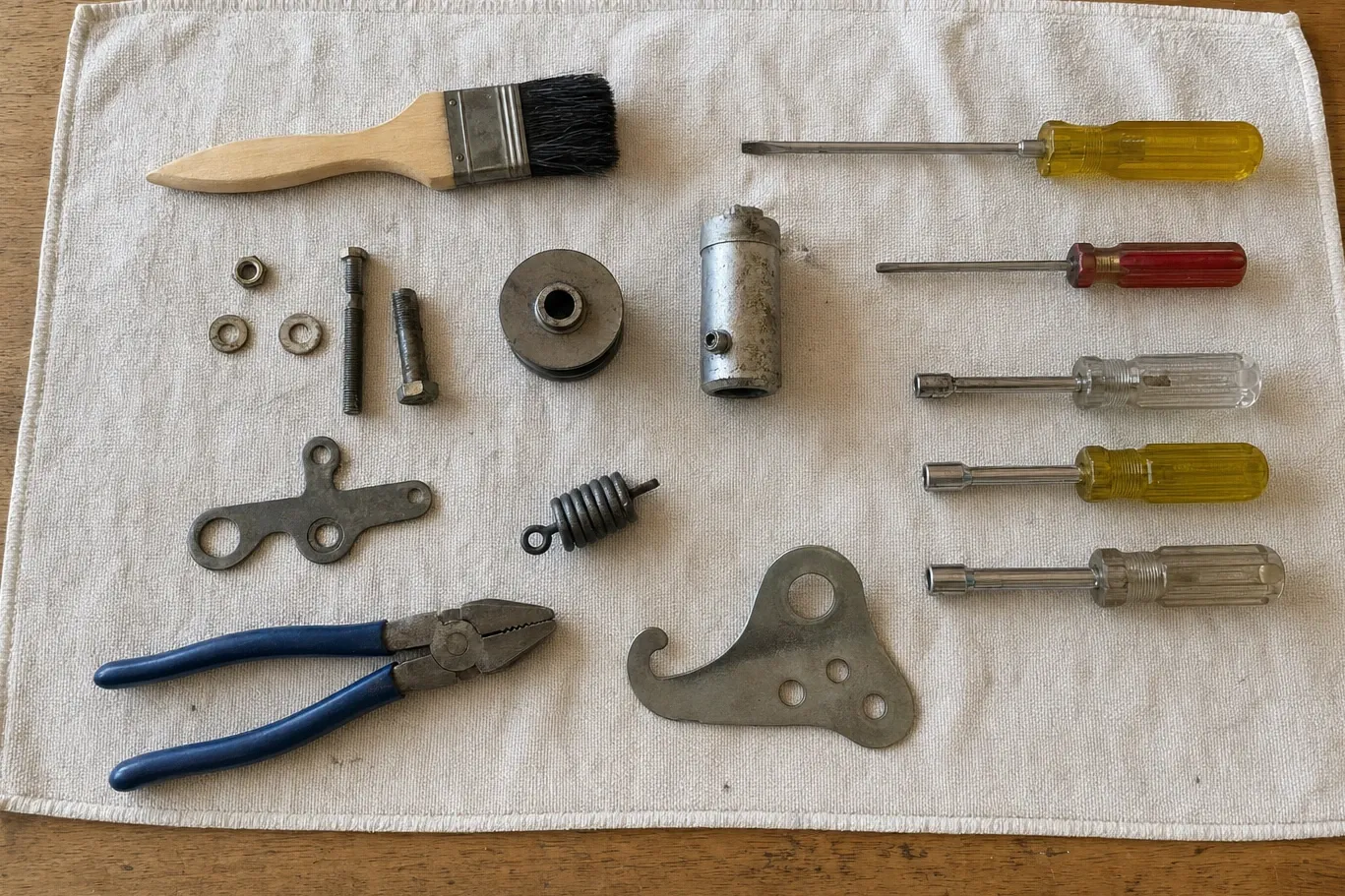
You can check this yourself and it takes ten minutes. Grille off, torch on the coil: no daylight showing between the fins means you have found it. Clear it with a soft brush and a vacuum, stroking along the fins rather than across them, and keep the nozzle off the aluminium — bent fins are worse than dust. While you are down there, put a hand near the condenser fan: it should be moving air with intent, not idling. A fan that runs slow, or that starts and stalls, has bearings on the way out and will take the compressor with it if it is left.
Defrost and airflow: warm shelves over a frozen freezer
If the freezer is hard-frozen and the fresh-food side is warm, stop thinking about refrigerant. On a single-evaporator built-in, the freezer is where the cold is made and the fresh-food compartment is fed from it through a duct and a damper. Every part of that path can fail while the freezer stays perfect.
Three things to look at, in order of likelihood:
The evaporator fan. It lives behind the rear freezer panel and pushes the cold air through to the fresh-food side. Open the freezer, hold the door switch in, and listen. No fan, no fresh-food cooling — and in a hot kitchen the difference shows up within hours rather than days.
Defrost. If the defrost heater or the terminating thermostat has failed, frost builds on the evaporator until it becomes a block of ice the fan cannot push air through. The tell-tale is a unit that cools well for a day after being left open to thaw and then degrades again. That is a diagnosis, not a coincidence.
The damper. A mechanical or motorised flap that meters cold air into the fresh-food compartment. Stuck shut, you get exactly this symptom. Stuck open, the salad drawer freezes.
The ice maker is the canary, not the problem
Ice production is the first thing to go and the last thing to come back, which makes it a useful instrument. An ice maker needs the freezer at around 5°F or below to complete a harvest cycle; when the cabinet is fighting the ambient temperature, freezer air runs a few degrees warmer than the display suggests, harvests slow down, and production drops off long before anyone notices the food is soft.
So “the ice slowed down in June” is rarely an ice-maker fault. It is usually the earliest symptom of the same heat-rejection problem that will lose you the fresh-food compartment a month later. Phoenix hard water does its own damage to fill tubes and inlet valves, and scale on a fill valve is a genuine and separate fault — but if ice and temperature slipped together, chase the temperature.
When it stops being a homeowner job
Cleaning a coil, checking a fan, thawing a unit to confirm a defrost fault: all reasonable to do yourself, and all of it useful information even if you then hand it over.
Where it stops: anything requiring gauges on the sealed system, any compressor that is cutting out on its overload, any built-in that has to come out of its cabinetry, and any control board diagnosis. Sealed-system work needs certification, recovery equipment and a vacuum pump, and a built-in dragged out on its own rollers is how door alignment and water lines get damaged.
One more honest line on it: a compressor failure on a cabinet with a decade behind it is the one repair worth thinking hard about. That conversation should include what the machine is worth against what a replacement costs, and any technician who will not have it with you plainly is not being straight.
Follow-up questions
- Is 110°F outside actually enough to stop a built-in refrigerator cooling?
- Not on its own. A healthy unit is designed with headroom for high ambient temperatures. What the heat does is remove the margin that was hiding a second fault — a dust-packed condenser, a slow condenser fan or a tired door gasket. In February those cost you nothing; in July they cost you the fresh-food compartment.
- How often should the condenser coil be cleaned in this climate?
- Twice a year is realistic here, and once should be in late spring before the first sustained run of 105°F days. Anywhere with pets or a nearby laundry vent, make it three. It is the single cheapest thing you can do to a built-in and it prevents more summer calls than anything else.
- The freezer is rock hard but the fridge side is warm. Is that low refrigerant?
- Almost never. A sealed system that is short of charge loses the freezer first, because that is where the evaporator lives. A hard freezer with a warm fresh-food compartment is an air-movement fault — evaporator fan, damper, or an evaporator iced over because defrost has stopped working.
- Can I just turn the fridge to its coldest setting for the summer?
- You can, and it will help a little, but it treats the symptom. A compressor already running near-continuously at high ambient temperature will simply run longer, which raises the head pressure it is fighting and shortens its life. Fix the heat rejection instead.