How Long Does a Viking Refrigerator Last? Lifespan and Aging Signs
A well-maintained built-in Viking refrigerator typically lasts around 15 to 20 years. See what shortens that run in a Phoenix kitchen, the upkeep that stretches it, and the signs that age rather than one worn part is the real problem.
Written by Sam Achterberg
Trade Service technician — electrical and intermittent faults · 15 years in the trade
Works on Viking appliances · supply voltage testing · intermittent electrical faults
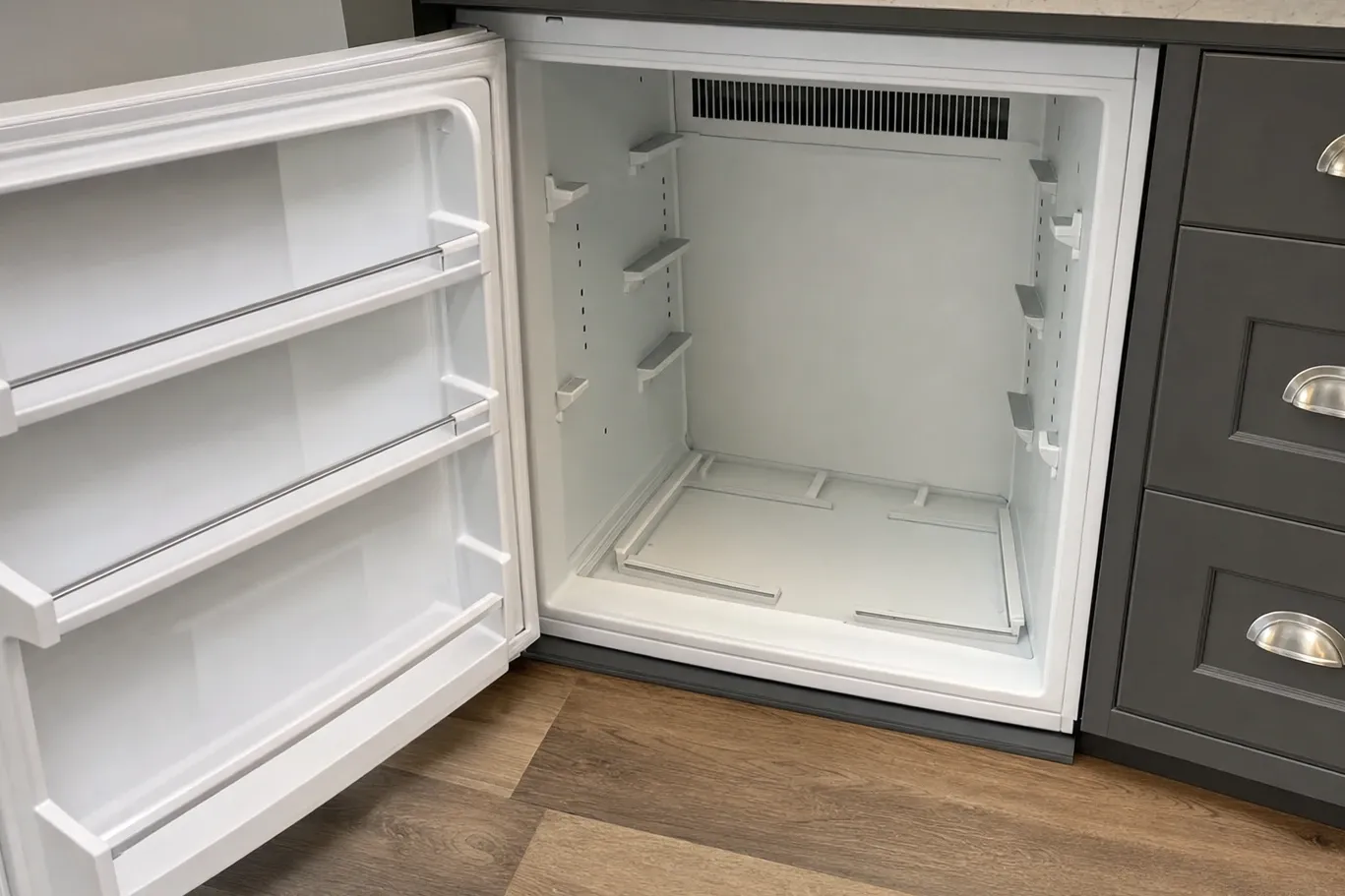
A built-in Viking refrigerator that gets basic care usually stays in service somewhere around 15 to 20 years, and the compressor and sealed system are normally the last components to quit. Most units that leave a kitchen early are pushed out by dusty condensers, tired door seals and a string of small failures that pile up, not by one fatal defect. In Phoenix, where summer afternoons routinely climb past 110 degrees and the condenser has to shed heat for months on end, that routine upkeep decides which end of the range your refrigerator reaches.
What a realistic lifespan looks like
Viking’s own warranty is a useful clue to how long the cooling core is meant to hold up. On integrated, built-in and freestanding models, the sealed system, meaning the compressor, evaporator, condenser, the tubing that links them and the dryer/strainer, is covered for parts and labor in years 3 through 6 and for parts only from year 7 through year 12. A twelve-year parts commitment on the compressor tells you the maker expects that hardware to keep running well beyond the first decade.
Undercounter and wine units sit in a different warranty category. There the sealed system gets parts and labor in years 3 through 6 and no parts-only extension afterward. Those compact cabinets also breathe through a small grille at toe level, so their compressors work harder, and it is sensible to plan on a shorter life for them.
To learn how old your unit is, find the model and serial plate. On 5 Series built-ins it sits high on the interior wall, tucked behind the lighting. On VEIL integrated FDREIC, FDFZIC and FDBMIC7360 units it is inside the fresh-food section, on the wall opposite the door opening. A technician can usually work out the build date from that serial number.
What wears out first, and what it costs
Wear parts fail on a fairly predictable pattern even when the cabinet has plenty of years left. The cheaper items go early and are worth fixing; the sealed system goes last, and that is where the repair-or-replace decision gets serious.
| Repair | Typical range | What you tend to notice |
|---|---|---|
| Refrigeration fan or defrost system | $280–$680 | Frost on the back wall, a warm fresh-food side |
| Control board or touch panel | $430–$670 | A blank or erratic display, wrong temperatures |
| Compressor or sealed-system repair | $1,430–$3,120 | Runs nonstop yet never gets properly cold |
These are typical ranges, and the firm price comes after diagnosis. The $89 visit includes that full diagnosis and is credited against the repair once you say go ahead. A puddle under the crisper drawers or an ice maker that has gone quiet rarely signals old age; those are usually a blocked drain or a filter and water-line issue.
Why Phoenix is hard on refrigeration
A refrigerator does not create cold. It pulls heat out of the cabinet and releases it through the condenser, and when that coil is coated in dust the compressor has to run longer cycles to do the same job. Run time is what wears a compressor out. The summer monsoon adds to the problem, since dust storms push fine grit through every gap in a house, and the grille under a refrigerator draws that grit straight onto the coil. Homes in Ahwatukee and North Central Phoenix that stay sealed up with the air conditioning running still collect it.
Water is the second local factor. Phoenix tap water is hard, and its minerals build up in filters, inlet valves and ice maker fill tubes. On VEIL integrated models the internal filter is rated for up to 3,000 litres, or 792.6 gallons, and a maximum of 12 months, so swap it at whichever limit comes first. If your unit struggles every July, our guide to a Viking refrigerator running warm through a Phoenix summer digs into that symptom.
Upkeep that adds years
A few habits do more for longevity than anything else:
- Keep the condenser clear. Viking describes the Super Clog-Resistant pin-and-tube condenser on 5 Series built-ins as maintenance-free under normal use, but if you spot dust on it, vacuum it with a long, narrow attachment.
- Answer the reminders. VEIL integrated units display CHECK COND. every 6 months. Turn the unit off by holding the power key for about 3 seconds, wait roughly 30 minutes, remove the grille below the door, go over the condenser with a soft brush on the vacuum, then switch it back on and reset the prompt.
- Watch for CL on a 7 Series. A blinking CL in the temperature readout means the coil needs cleaning. Viking suggests doing it every 6 months, and holding the up and down arrows together for 3 seconds clears the alert.
- Look after the gaskets. Every three months, wash the door seals with mild detergent or 4 tablespoons of baking soda stirred into a quart of warm water, dry them, and rub on a thin film of petroleum jelly to keep the rubber flexible. A seal that leaks warm air adds compressor run time just as a dirty coil does.
Signs that age, not one part, is the problem
One failed fan on a ten-year-old refrigerator is a repair. A pattern is different. These signs suggest the whole appliance is wearing down:
- A second or third unrelated repair arrives within a short stretch, each on a different system.
- The compressor runs almost continuously and temperatures drift even after the coils are clean and the seals are sound.
- The sealed system needs work after the parts-only coverage has ended at year 12.
- The liner is cracked, the door hinges sag, or the seals no longer hold even when new.
- The model is no longer made. Viking’s documentation library lists several older integrated columns as discontinued, including the VRI7240W all-refrigerator, the VFI7180W and VFI7240W all-freezers, and the VBI7360W and FBI7360W bottom-freezers. Discontinued does not mean unrepairable, though some model-specific parts can become harder to source over time.
Weighing repair against replacement
A comparable new Viking costs many times more than a mid-life repair, even before any cabinetry or custom panel work, which is why a fan, defrost or control repair is almost always worth doing on a sound cabinet. A compressor or sealed-system job at $1,430–$3,120 is where age matters most. On a unit under ten years old with tight seals, it usually makes good sense; on one nearing 20 with several worn systems, the money is often better spent on a new refrigerator.
If you are deciding what to do in Arcadia, Biltmore, North Central Phoenix or Ahwatukee, a diagnosis gives you the facts before you spend anything. Our Viking refrigerator repair page explains the visit, or call (480) 666-4248 to set one up.
Follow-up questions
- How long does a Viking refrigerator last on average?
- A built-in Viking refrigerator that gets regular coil cleaning and gasket care typically lasts around 15 to 20 years. Undercounter models carry a shorter sealed-system warranty and have less room to vent heat, so expect a shorter working life from those.
- Is it worth repairing a 15-year-old Viking refrigerator?
- Usually yes, when the fault is a fan, defrost part or control board, because those repairs typically run $280–$680 or $430–$670, a small share of what a comparable new Viking costs. A sealed-system failure at that age calls for a closer look at the cabinet, seals and general condition before you commit.
- Why is my Viking refrigerator leaking water from the bottom?
- A blocked or frozen defrost drain is the most common reason, because the meltwater spills onto the floor instead of reaching the drain pan. A loose or cracked supply line to the ice maker is the other usual suspect. Neither problem means the refrigerator is near the end of its life.
- Why did my Viking refrigerator stop making ice?
- An overdue water filter is a frequent cause, and hard Phoenix tap water clogs filters with minerals sooner than softer water would. A frozen fill tube, a failing water valve or an ice maker that has been switched off can also stop production. Change the filter first, then book a visit if ice still does not appear.
- What does a refrigerator service visit cost?
- The visit is a flat $89 that covers the trip and a full diagnosis. If you approve the repair, that $89 is credited toward the bill, and you get a firm price before any work begins.